İçindekiler (11)
- What is tissue paper and how is it produced?
- Physical and chemical properties of tissue paper
- The eco-friendly structure of tissue paper
- Choosing Tissue Paper: Professional Tips
- Choosing the right tissue paper according to packaging purpose
- How to choose color, thickness, and size?
- What to pay attention to for products in contact with food
- Tissue Paper Packaging Techniques by Sector
- Use of tissue paper for food products
- Protection with tissue paper in textile products
- Frequently Asked Questions
What is tissue paper and how is it produced?
An indispensable part of the professional packaging world, tissue paper is a thin and semi-transparent special type of paper made from one hundred percent cellulose. This lightweight material, which can be produced in various colors, is used today in many sectors for protection and presentation purposes. The tissue paper production process begins with the processing of cellulose obtained from wood fibers. First, the cellulose raw material is prepared and purified through chemical processes. Then, the cellulose is mixed with water to form a pulp. This pulp is fed into the papermaking machine and turned into a thin layer. In the next stage, water is removed from this layer and the paper surface becomes smooth and homogeneous. The resulting thin layer is fully dried and hardened by being passed between drying cylinders. Finally, the paper is cut to the desired width and packaged as a roll or in sheets.
Physical and chemical properties of tissue paper
Tissue paper has different properties from other types of paper: Tissue paper is produced in two different kinds, plain and onion skin. Being suitable for printing thanks to its smooth surface is one of the reasons it is preferred for writing and printing operations. In addition, its dye does not transfer onto the product it is packaging; this property is particularly important in the packaging of food and textile products.
The eco-friendly structure of tissue paper
As sustainable packaging solutions gain increasing importance today, tissue paper stands out with its eco-friendly structure. Made entirely from natural cellulose fibers, tissue paper is a 100% recyclable material. This property provides a great advantage in terms of sustainability. Most tissue paper is produced in an eco-friendly way, and printing can be done using inks that do not harm the environment. The fact that less raw material is used thanks to its thin structure, and therefore less waste is created, allows it to be regarded as a sustainable option. In addition, its suitability for contact with food is an indication that it does not contain harmful chemicals. Biodegradable varieties of tissue paper help reduce the impact of packaging waste on nature. It is preferred especially by environmentally conscious brands and consumers.
Choosing Tissue Paper: Professional Tips
Choosing the right tissue paper is key to ensuring that the packaging process yields professional results. Its smooth structure, delicate texture, and various color alternatives make tissue paper the choice of many brands.
Choosing the right tissue paper according to packaging purpose
Choosing the tissue paper suited to your packaging purpose makes a big difference in terms of protecting and presenting your products. First, tissue paper comes in two different types: plain and onion skin. Your choice should be determined according to the characteristics of the product you will be packaging. While thin and flexible tissue papers are generally preferred for textile products, more durable options are suitable for breakable items. In gift wrapping, tissue papers that offer an aesthetic appearance thanks to their semi-transparent structure are ideal. In addition, the use of high-quality tissue paper is recommended for creating a premium perception in luxury products.
How to choose color, thickness, and size?
There are three basic factors to consider when choosing tissue paper: In addition, wholesale purchasing options are advantageous for businesses that want to reduce tissue paper costs. Furthermore, you can choose the option suited to your usage need from roll or single-cut options.
What to pay attention to for products in contact with food
When choosing tissue paper for food products, you should make sure it is made from 100% cellulose. This property ensures that food items are packaged safely. It is important that the dye of the tissue papers preferred especially for packaging products such as chocolate, candy, and nuts not transfer onto the food. It is also extremely important that tissue papers that will come into contact with food be stored and used under hygienic conditions. This way, food items such as cakes and pastries can be kept clean and dust-free during transport or storage.
Tissue Paper Packaging Techniques by Sector
Different sectors have developed special techniques over time to take advantage of the unique properties of tissue paper. This lightweight and semi-transparent material offers solutions that can be adapted to each sector's specific needs.
Use of tissue paper for food products
In the food sector, tissue paper is used for both protective and aesthetic purposes. Boutique chocolate and confectionery brands in particular prefer this material to achieve a premium look. The tissue paper placed in the boxes of such products protects the chocolates from external factors while evoking a “special product” perception in consumers. It is also widely used in the presentation of bakery products. The food-contact-compatible property of tissue paper stems from the fact that all materials used in the production stage are safe in terms of health. Therefore, it is also ideal for protecting foods such as fruits, vegetables, and nuts from dust and external factors.
Protection with tissue paper in textile products
In the textile sector, tissue paper plays an important role in enhancing brands' perception of quality with its delicate and lightweight structure. In particular, products such as shoes, bags, shirts, scarves, shawls, and underwear are packaged with this material. Its smooth and slippery surface provides professional protection without damaging the product in any way. Luxury apparel brands especially prefer using tissue paper in e-commerce shipments. This thin material prevents products from being damaged while clothes are folded and stored, and enriches the opening experience.
Frequently Asked Questions
What is the minimum order quantity for tissue paper?
Printed tissue paper starts at a minimum of 2,500 units. For an unprinted order, 500 units is sufficient. Special pricing is applied for ongoing orders of 10,000+ units.
In what dimensions is tissue paper cut?
The standard cut is 50x75 cm. According to your product packaging, it can also be produced in custom dimensions of 35x50, 40x60, 50x70, 60x80 cm. Custom-size cutting is free for 1,000+ units.
Is single-color or multicolor printing done?
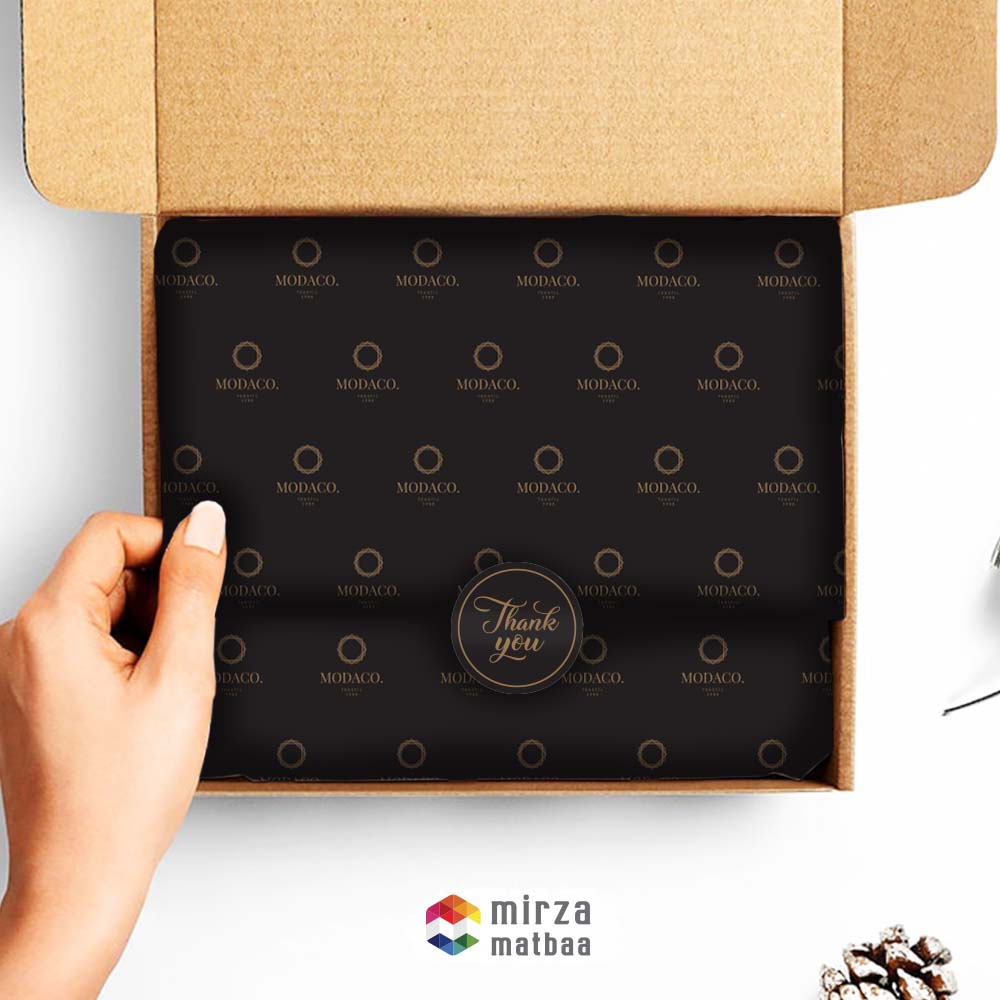
Single-color logo printing is the most economical and clearest-looking option. 2-3 colors are possible, but since tissue paper is semi-transparent, minimal designs are recommended. Black tissue paper + gold/silver foil is effective in the luxury segment.
Which colors are printed on black tissue paper?
Gold/silver foil printing and white ink printing are done on black tissue paper. Classic CMYK does not show up on a black background. Foil or metallic special ink is recommended for the premium segment.